
In the rapidly evolving world of health and wellness, the demand for high-quality dietary supplements has surged. Consumers are increasingly seeking products that cater to their specific health needs, from vitamins and minerals to specialized botanical extracts. This trend has given rise to a booming market for private label dietary supplements, where brands can offer customized solutions tailored to their target audience. At the heart of this market lies the OEM (Original Equipment Manufacturer) factory, a critical partner for brands looking bring to their vision to life. This article delves into the key aspects that make a trusted dietary supplements OEM factory an invaluable asset for private label product development.
I. The Importance of a Reliable OEM Factory
1. Ensuring Product Quality and Safety The foundation of any successful dietary supplement brand is the quality and safety of its products. A trusted OEM factory adheres to stringent quality control standards, such as GMP (Good Manufacturing Practices) certifications. These certifications ensure that the manufacturing process meets the highest standards for cleanliness, accuracy and, consistency. From raw material sourcing to finished product packaging, every step is meticulously monitored to prevent contamination and ensure that the supplements meet the label claims. For example, a reliable factory will conduct thorough testing on raw materials to verify their potency and purity, and perform stability testing on finished products to ensure they maintain their efficacy over time.
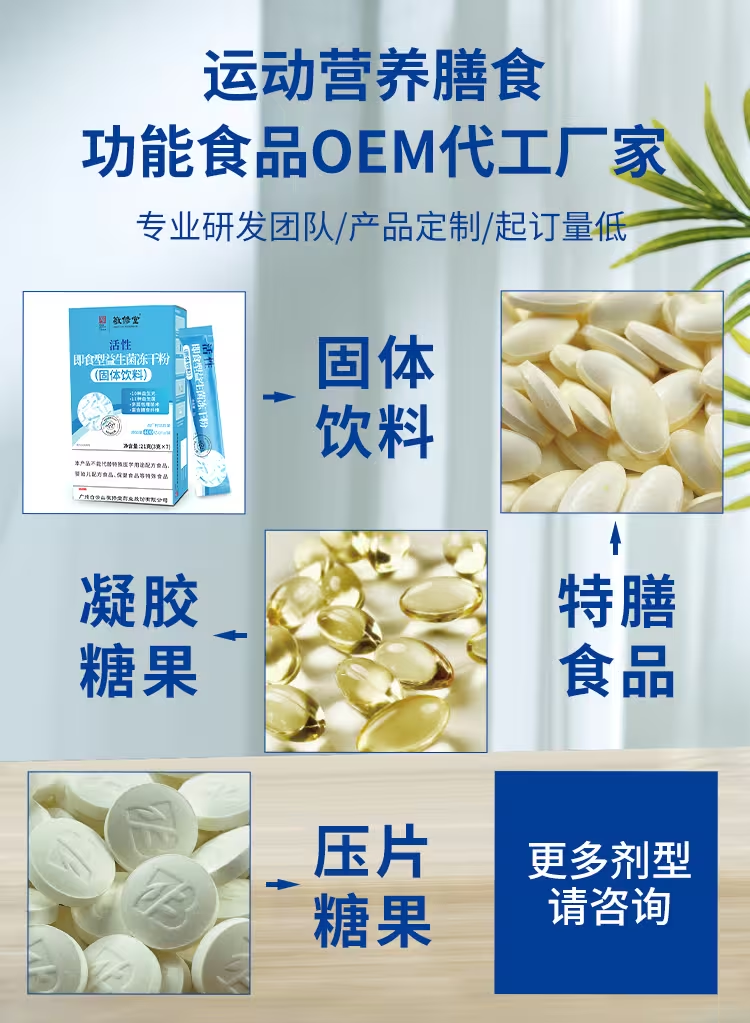
2. Customization and Flexibility One of the key advantages of partnering with a trusted OEM factory is the ability to customize products to meet specific brand requirements. Whether it's a unique blend of ingredients, a specific dosage form (such as capsules, tablets, or powders), or even the packaging design, a reliable factory can offer the flexibility needed to create a product that stands out in the market. This customization is crucial for private label brands, as it allows them to differentiate themselves from competitors and cater to niche markets. For instance, a brand targeting athletes may require a supplement with a specific combination of amino acids and vitamins, while a brand focused on elderly consumers might need a product with enhanced bioavailability and easier-to-swallow forms.
3. Regulatory Compliance Navigating the complex landscape of dietary supplement regulations can be a daunting task for private label brands. A trusted OEM factory serves as a knowledgeable partner in this regard, ensuring that all products comply with the relevant laws and regulations. This includes adhering to labeling requirements, maintaining accurate records, and staying updated on any changes in regulatory standards. By partnering with an experienced factory, brands can avoid costly mistakes and ensure that their products are market-ready and compliant from the outset.
II. Key Features of a Trusted Dietary Supplements OEM Factory
1. Advanced Manufacturing Capabilities A state-of-the-art manufacturing facility is essential for producing high-quality dietary supplements. A trusted OEM factory should be equipped with the latest technology and machinery to handle various types of supplement production. This includes high-speed encapsulation machines for creating uniform capsules, tablet presses for producing consistent tablets, and sophisticated blending equipment for creating precise ingredient mixtures. Additionally, advanced packaging lines ensure that products are sealed and labeled accurately, protecting them from moisture, light, and other environmental factors that could affect their quality.
2. Comprehensive Testing and Quality Control Quality control is a cornerstone of a reliable OEM factory. From incoming raw materials to finished products, rigorous testing protocols are in place to ensure that every batch meets the highest standards. This involves testing for potency, purity, and contaminants such as heavy metals, pesticides, and microbial levels. In-house laboratories equipped with advanced analytical instruments, such as HPLC (High-Performance Liquid Chromatography) and GC-MS (Gas Chromatography-Mass Spectrometry), enable precise analysis of ingredients and finished products. Regular audits and third-party certifications further validate the factory's commitment to quality control.
3. Ingredient Sourcing and Supply Chain Management The of quality a dietary supplement is only as good as the ingredients used. A trusted OEM factory has a robust supply chain network, sourcing high-quality raw materials from reliable suppliers. This involves establishing long-term relationships with suppliers who adhere to strict quality standards and can provide documentation of ingredient origin and testing. Effective supply chain management also ensures a steady supply of raw materials, minimizing the risk of production delays due to shortages. Additionally, a reliable factory will have measures in place to verify the authenticity of ingredients, especially for those that are prone to adulteration, such as certain botanical extracts.
III. Building a Successful Partnership with an OEM Factory
1. Open Communication and Collaboration A successful partnership between a private label brand and an OEM factory hinges on open and transparent communication. From the initial stages of product development to ongoing production, both parties must be aligned on goals, expectations, and timelines. Regular meetings and updates allow for the sharing of ideas, addressing any concerns, and ensuring that the product vision is accurately translated into reality. Effective collaboration also involves providing detailed product specifications, including ingredient lists, dosage forms, and packaging requirements, to enable the factory to produce the desired product.
2. Long-Term Relationship Building Choosing an OEM factory is not just a one-time decision; it is the beginning of a long-term partnership. A trusted factory will invest in building a strong relationship with its clients, offering ongoing support and assistance. This includes providing technical advice on product formulations, staying updated on industry trends and innovations, and offering flexibility to accommodate changes in product requirements or market demands. By fostering a long-term relationship, both the brand and the factory can benefit from mutual growth and success.
3. Continuous Improvement and Innovation The dietary supplement industry is constantly evolving, with new research and advancements emerging regularly. A trusted OEM factory is committed to continuous improvement and innovation, staying ahead of industry trends and incorporating new technologies and processes into their operations. This can include adopting new manufacturing techniques to improve product quality, exploring novel ingredients and formulations, and enhancing packaging solutions to better protect and market the products. By partnering with a forward-thinking factory, private label brands can ensure that their products remain competitive and relevant in the ever-changing market.
In conclusion, a trusted dietary supplements OEM factory is a vital partner for private label brands looking to succeed in the competitive health and wellness market. By ensuring product quality and safety, offering customization and flexibility, and maintaining regulatory compliance, a reliable factory provides the foundation for a successful product launch. With advanced manufacturing capabilities, comprehensive quality control, and robust ingredient sourcing, a trusted OEM factory can deliver high-quality products that meet the needs of consumers. By fostering open communication, building long-term relationships, and embracing continuous improvement and innovation, both the brand and the factory can thrive in the dynamic world of dietary supplements.